Got Cages in Backsurgery Years Ago Why Is My Back Hurting Again
According to statistics from the American Chiropractic Association, upwards to 80% of adults volition experience back hurting at some point in their life. That back hurting accounts for more than 264 million missed workdays a twelvemonth and is the 3rd most common reason for doctor visits. Our backs are a complicated system of bones, ligaments, joints and muscles — with the spine at the centre of information technology all. When you have back pain, pinpointing the issue and choosing a treatment path requires conscientious consideration.
If you're experiencing dorsum pain that stems from your spine, you want to notice answers that allow you to return to normal life. Later on failed non-surgical attempts at recovery, you may consider spine surgery. Back surgery is an platonic solution for some people, but it may not be the right fit for everyone. The post-obit is helpful data to consider when deciding if dorsum surgery could be for y'all.
Is Spinal Surgery Unsafe?
The answer to the question, "Is lower back surgery dangerous?" is both yes and no. Every surgical procedure has risks, including spinal surgery. The nature of spinal surgery increases the take chances of severe complications compared to other procedures. Spinal surgery happens at and around sensitive areas in the spine and spinal cord. The most significant risks you could face if an error occurs during surgery include paralysis or a spinal infection.
Despite the possibility of severe complications, the mortality rate for spinal surgeries is low. One report constitute a bloodshed charge per unit of 0.13% out of 803,949 lumbar spine surgery patients. The charge per unit of surgical complications is too low, with a seven.6% complexity rate in a study of 3,475 patients. Your back surgery may deviate from standard risk levels, depending on your existing health weather and the type of surgery you're having.
What Makes Spinal Surgery Dangerous?
Much of the potential danger in a spinal surgery links to the potential bodily risks if something goes wrong during the procedure. The spine and spinal string play pivotal roles in bodily forcefulness, sensation and movement. Mistakes or complications during surgery could impair one or more than of these functions. In addition to these dangers, a more involved surgical process could nowadays more pregnant risks than a elementary procedure.
Aside from danger, one of the paramount concerns for back surgery is whether or not it is successful.
What Pct of Back Surgeries Are Successful?
Ane study estimated the success rate for back surgeries to be about 50%. This guess is bourgeois, as most success rates depend on a wide variety of factors. Your health, specific surgery, source of pain and any surgery complications influence whether or not your process will be constructive.
What Percentage of Back Surgeries Fail?
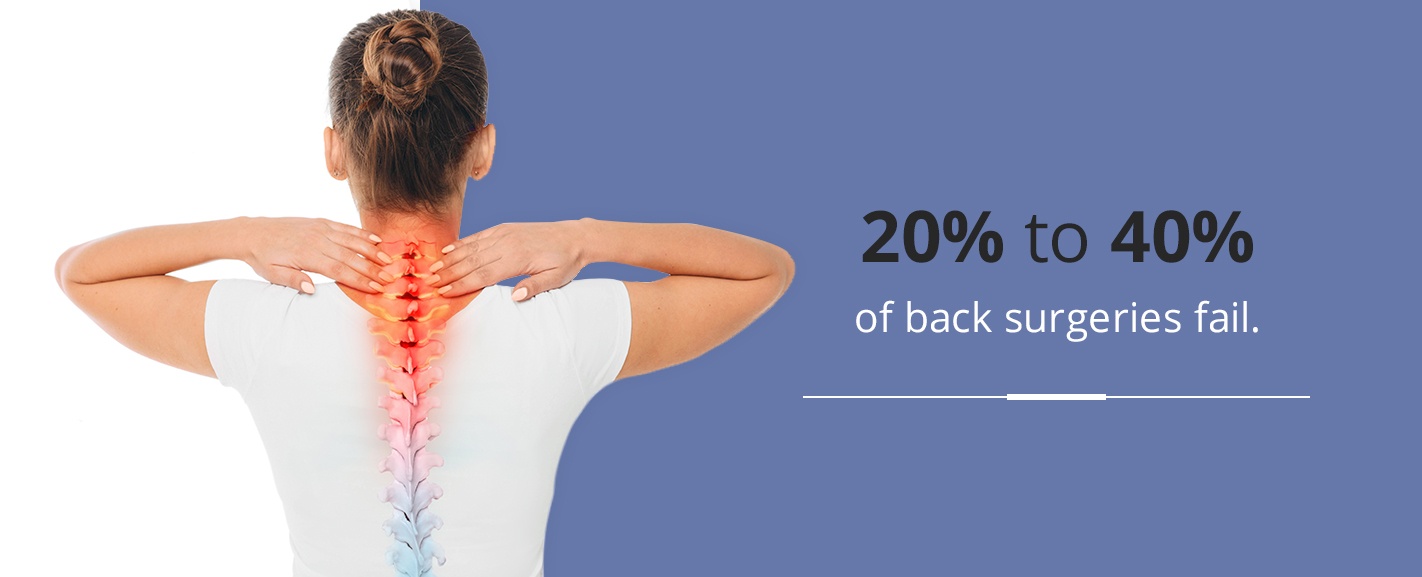
The American Society of Anesthesiologists estimates that twenty to forty% of back surgeries fail. Patients having repeated back surgeries have a much college run a risk of failure. One study found only 30% of second back surgeries are successful. The number decreases for third and fourth back surgeries, with a fifteen% and five% success rate, respectively.
Unfortunately, failed back surgery is common enough that information technology has received classification equally a medical condition. Failed back surgery syndrome (FBSS) occurs when a patient experiences connected pain in the dorsum, neck or limbs post-obit a surgery meant to reduce pain.
How Common Is Failed Back Surgery?
Failed back surgery is relatively common — but not because the surgeon performed the procedure incorrectly. Back surgery can merely achieve two goals: decompressing a pinched nerve root or stabilizing a painful joint. If a pinched nerve or painful joint is the source of a patient's pain, a md may be able to address the issue with surgery.
However, it can exist challenging to identify and diagnose one of these factors before surgery. One of the most common reasons back surgery doesn't work is because the surgery selected does non accost the source of a patient'southward pain. Considering advisable non-surgical measures before surgery can help you avoid a costly process that does not adequately address dorsum pain.
What Are the Possible Complications After a Procedure of the Spine?
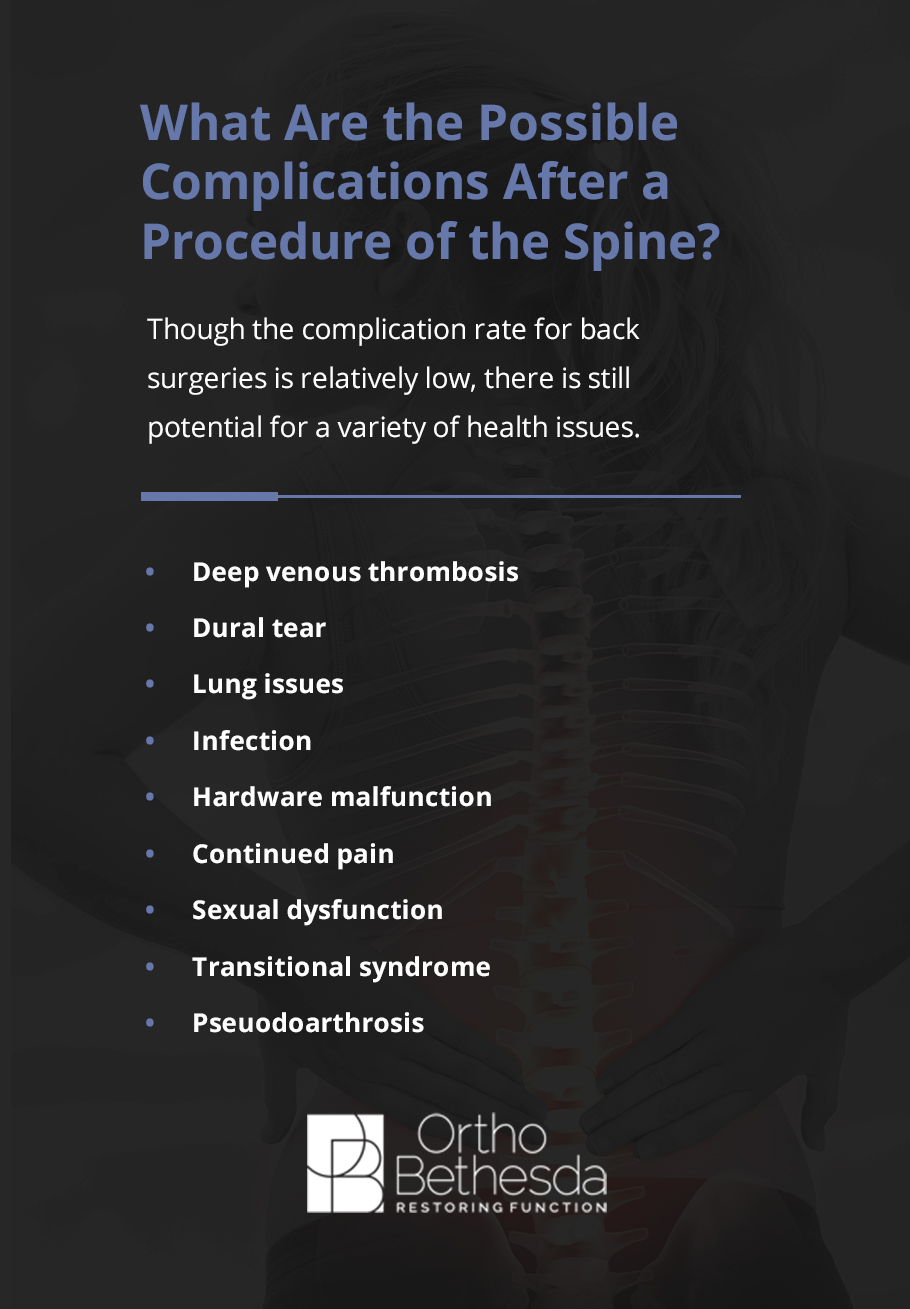
Though the complication charge per unit for back surgeries is relatively low, in that location is still potential for a variety of health issues. The following are some common complications to consider.
- Deep venous thrombosis: Post-obit a surgery nearly the pelvis or lower extremities, patients may feel claret clotting in the calf, thigh or pelvis. This phenomenon occurs as the torso tries to terminate bleeding following the surgery. It may also occur if blood vessels near the surgery site get injured.
- Dural tear: If surgery disrupts the protective roofing over the spinal cord and nerves, yous could take a dural tear. Surgeons may detect and repair a dural tear during surgery, and well-nigh tears heal without an issue. If the tear does not heal properly, you may experience headaches from leaking spinal fluid.
- Lung issues: If you undergo general anesthesia, you may experience temporary lung function issues following the surgery. Exercising your lungs before and after surgery is helpful to promote optimal role and recovery.
- Infection: Spinal surgeries accept a low infection charge per unit, just it is possible. If the incision site becomes infected, the infection tin spread to the spinal cord and vertebrae. Many doctors will prescribe antibiotics before surgery to help prevent infection, specially if your surgery involves metal hardware or a bone graft.
- Hardware malfunction: Many spinal surgeries apply screws, rods and plates to aid vertebrae heal in proper alignment. If one of these hardware pieces breaks or moves before the os has a take chances to heal, y'all may demand some other surgery to correct it.
- Connected pain: If your surgery is non successful, you may experience continued pain later y'all've recovered. In worst-example scenarios, surgery may increase your pain. It'south essential to place your pain source every bit accurately as possible before having surgery to decrease your chance for FBSS.
- Sexual dysfunction: The spinal cord and nerves transmit signals throughout your torso. You lot may experience sexual dysfunction if surgery amercement the nerves virtually your pelvic region.
- Transitional syndrome: In a healthy spine, all the vertebrae piece of work together to distribute the load from your body. After back surgery, vertebrae adjacent to the problematic ones may take on an uneven load while the spine heals. This issue could advance vesture in the nearby vertebrae and crusade pain.
- Pseuodoarthrosis: If you undergo a spinal fusion surgery and your vertebrae do not successfully fuse, you may take connected hurting from pseudoarthrosis. You may require additional surgery to ready this status if information technology does not heal or worsens over time.
Yous may be less likely to experience specific complications based on your wellness condition. Talk to your doctor to learn most a list of complications that could be pertinent to y'all following a spinal surgery.
Spinal Surgery Success Rates
As mentioned before, several factors impact spinal surgery success rates. Your surgery method, the condition you're attempting to ready, your surgeon, aftercare programme and more than play into the results you may experience. For example, your depression back surgery success charge per unit may vary, depending on whether your low back pain stems from a pinched nerve or herniated disc.
Though the percentages given in this section point general success rates, you'll need to talk to your surgeon to determine a projected success charge per unit for your unique situation.
Thoracic Spine Surgery Success Rate
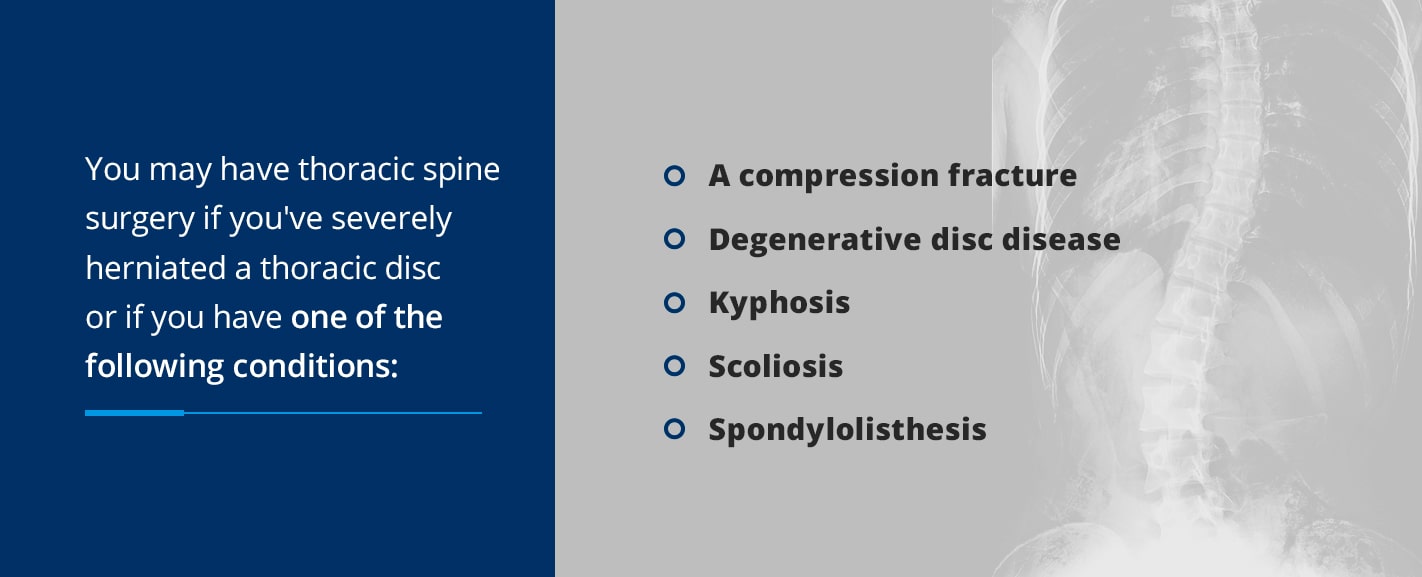
The thoracic spine is in the middle of the spine, between the abdomen and upper dorsum. You may have thoracic spine surgery if you lot've severely herniated a thoracic disc or if yous have one of the following conditions:
- A pinch fracture
- Degenerative disc disease
- Kyphosis
- Scoliosis
- Spondylolisthesis
Co-ordinate to one study, patients who had thoracic spine surgeries with the posterolateral arroyo had a complication rate of 12 to 30%. Later 17 months of recovery, 76.9% of these patients reported satisfaction with the success of their surgery.
Minimally Invasive Spine Surgery Success Charge per unit
A surgeon might use minimally invasive spine surgery (MIS) to stabilize vertebrae and spinal joints or relieve pressure on spinal nerves. This approach is a more conservative method compared to other open up spine surgeries. Surgeons utilize small-scale incisions, microscopic video cameras and guiding instruments to minimize the amount of trauma to the surgery site.
You may authorize for MIS if you have i of the following weather condition:
- Degenerative disc disease
- Compression fractures
- A herniated disc
- Lumbar spinal stenosis
- Scoliosis
- Spinal infections
- A spinal tumor
- Spondylolisthesis
There are several types of MIS procedures, depending on where a surgeon makes their incision. For an MIS transforaminal lumbar interbody fusion, success rates range from 60 to 70%, with an 80% satisfaction charge per unit for patients. For an MIS posterior lumbar interbody fusion procedure, patients experienced a 90 to 95% successful fusion rate.
Herniated Disc Surgery Success Rate

Herniated discs are common in the lumbar spine, merely they may also occur in the cervical spine nearly the cervix. If your discs have degenerated with time and ruptured, you may require herniated disc surgery. Depending on the location of your herniated disc, you may crave a different surgical procedure.
- Microdiscectomy:This procedure is common for herniated lumbar discs. Microdiscectomies remove the herniated portion of a disc underneath the nerve root to give it more space, relieve pressure and promote root healing.
- Discectomy: A discectomy is mutual for herniated cervical discs. Surgeons remove disc material through the forepart or back of the neck and fuse the disc infinite to take force per unit area off the spinal string and nerve roots.
According to one study, the success rate for a herniated lumbar disc surgery was 78.9% among 39,048 patients. This same study reported a 94% long-term success rate for patients undergoing herniated cervical disc surgery.
Spinal Fusion Surgery Success Charge per unit
Several spinal fusion surgeries tin can assist limit back pain that stems from specific points. A fusion surgery involves joining ii vertebrae with a bone graft, then they become one solid os. This procedure can give your spine more stability and address pain you may feel when moving.
You may consider a spinal fusion surgery if you have one of the following conditions:
- Numbness, weakness or tingling in your legs
- Pain in your buttocks, back, thighs or legs
- Kyphosis
- Scoliosis
- Vertebrae injuries
- Spinal tumors or infections
Depending on the condition the surgery is treating, spinal fusion has a lxx to ninety% success charge per unit.
Sciatica Surgery Success Rate
Sciatica occurs when you experience sudden pain in your hip and lower dorsum that radiates to the dorsum of the leg and thigh. You may experience sciatica equally a effect of normal wearable and tear that accompanies aging. Most eighty to 90% of individuals with sciatica will experience relief without the need for surgery. Still, sciatica surgery may exist appropriate if you feel disabling leg hurting even later on non-surgical intervention.
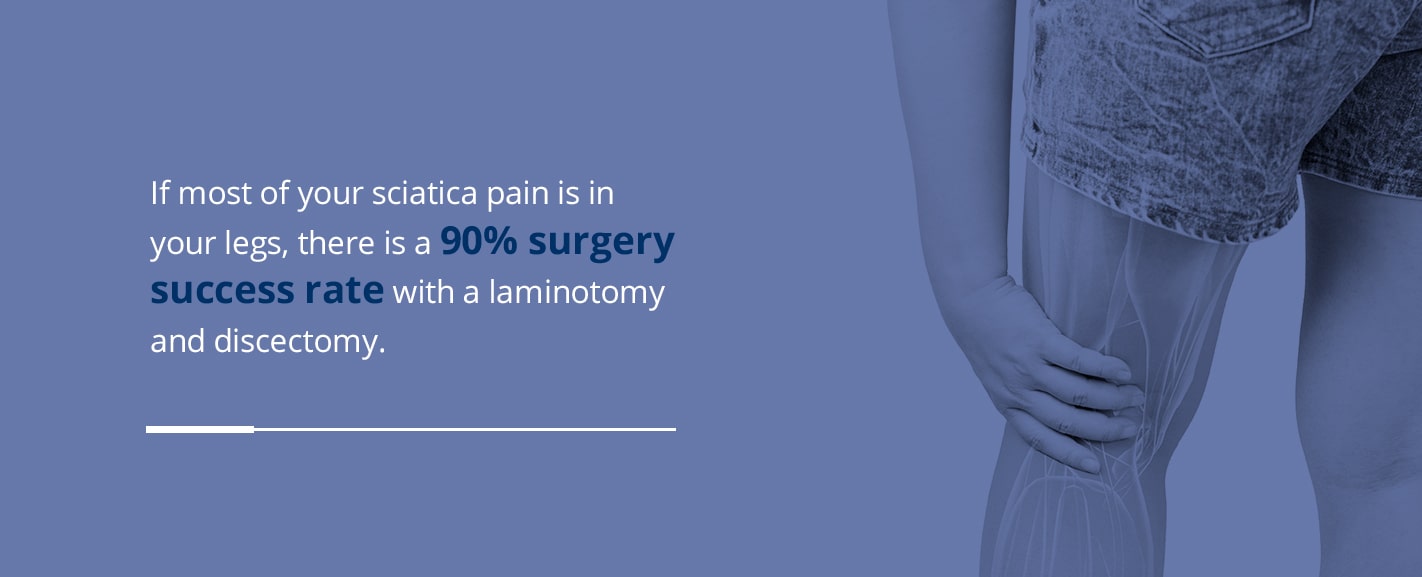
If almost of your sciatica pain is in your legs, there is a 90% surgery success rate with a laminotomy and discectomy.
Why Do So Many Back Surgeries Fail?
If most back surgeries accept a greater than 50% average success charge per unit, why is FBBS an upshot? The answer is that almost dorsum surgeries rely on a variety of factors for success. These include patient health, the type of spine surgery a patient has and the mode mail service-operative factors play out.
Patient Factors
Your health may influence the charge per unit and success at which you recover. According to one report, the following atmospheric condition could negatively affect back surgery success:
- Preexisting patient depression
- Poor psychosocial well-beingness
- Smoking
- Obesity
- Patient age
- Hypertension
Spine Surgery Factors
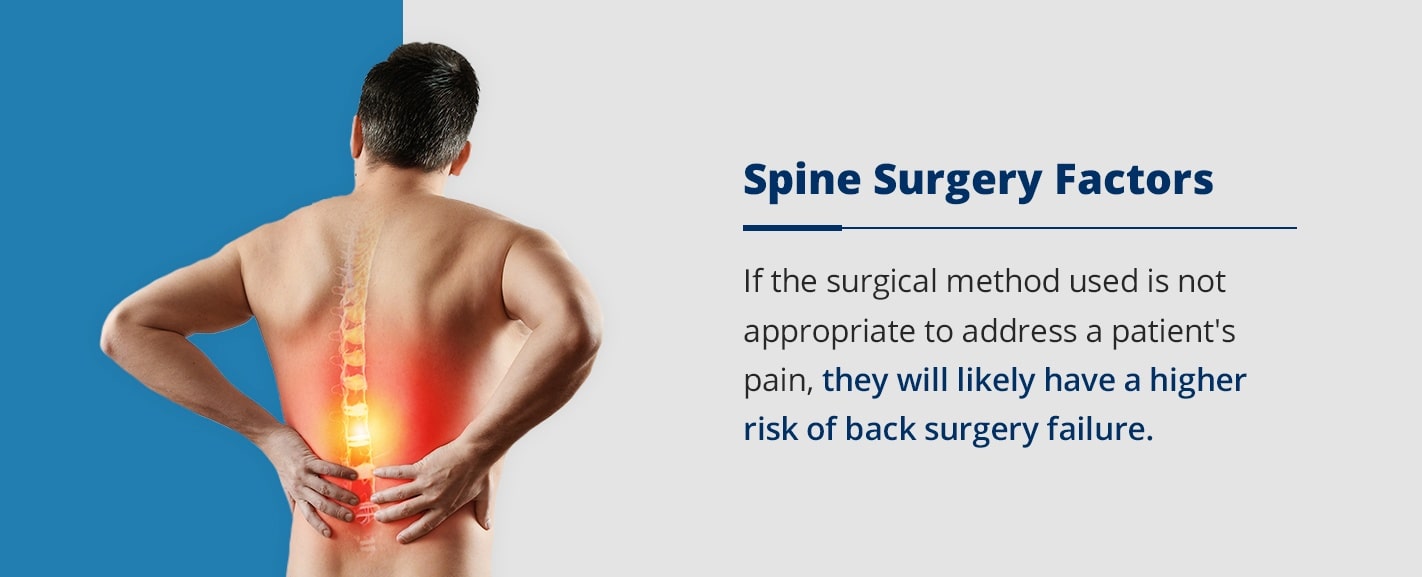
If the surgical method used is not appropriate to address a patient'southward hurting, they volition likely have a higher take chances of back surgery failure. If there are any errors or complications during the operation, the surgery may have a greater hazard of failure equally well.
Post-Operative Factors
Dorsum surgeries may non be as successful if a patient has i of the following conditions soon after surgery:
- A hematoma in the epidural or subdural areas
- Spinal infection
- Collection of fluid near the spine
- A nerve injury
Surgery may also have decreased effectiveness if a patient experiences transition syndrome as they recover.
Is It Worth It to Have Back Surgery?
Before you lot consider dorsum surgery, doctors typically recommend you try bourgeois, non-surgical options. Most physicians suggest a three-month time window for these options, as many back issues will resolve themselves after that fourth dimension. If you've completed non-surgical intervention and still struggle with back pain, you may want to talk to your md most surgery.
The National Institute of Arthritis and Musculoskeletal and Skin Diseases recommends surgery in the following situations:
- When a patient has a ruptured or herniated disc and impairment to one or more discs
- When a patient has degenerative disc disease due to aging
- When a patient has spinal stenosis that narrows the spinal column and puts pressure on the spinal string and nerves
- When a patient has spinal fractures attributed to osteoporosis
- When a patient has spondylolisthesis and one or more than bones slips out of identify
Whether you fall into one of the in a higher place categories or not, there are several crucial questions to consider before pursuing surgery:
- What are the surgery risks, and how could they touch me?
- What are the potential long-term consequences if I take back surgery?
- What are the potential long-term consequences if I don't have surgery?
- What is the recovery fourth dimension for the procedure?
- What does recovery entail?
- How long will I be unable to work?
- How experienced is the surgeon?
- What are the physician and surgeon recommendations for the procedure?
- What is the success rate for this type of surgery for my specific pain?
Different Options for Spine Treatment
No matter your state of affairs, treatment options range from general to specific. Talk to your physician to determine what may be appropriate for your back pain.
Non-Surgical Options for Back Pain

Earlier having back surgery, non-surgical treatments similar the following tin aid mitigate or completely relieve your hurting.
- Rut and ice:Alternating between a heating pad and cold pack may exist plenty to relieve temporary back pain.
- Pain medication:You may exist able to address back hurting with over-the-counter acetaminophen, or your doc may prescribe a stronger drug. Each hurting medication has trade-offs in forcefulness versus long-term consequences, which you should discuss with your dr..
- Epidural steroid injections: If oestrus, ice and pain medications do not address your pain, your doctor may recommend an epidural steroid shot. These injections, administered to the spine, tin help decrease inflammation in the affected area.
- TENS units:A TENS unit of measurement has glutinous electrode pads that connect to a small, bombardment-operated device. You can position the electrodes over the painful area, and the device volition deliver an electric current. This stimulation masks and reduces the pain you experience in the affected surface area.
- Lifestyle changes: You may exist able to address your dorsum pain by changing some of your habits. If and so, your doctor may recommend losing weight, quitting smoking, improving your posture or modifying your activities.
- Physical therapy:If your back pain lasts from two to six weeks, your doctor may recommend physical therapy. Your physical therapist may guide you through stretches and strengthening exercises to help with your pain.
Surgical Methods
If you notwithstanding feel severe pain after 3 months of not-surgical intervention, you may desire to consider surgery. Depending on where you lot're experiencing pain and what is causing that pain, there are several surgical methods available.
- Artificial disc replacement: If i of your vertebral discs has become severely damaged, your doctor may recommend an artificial disc replacement procedure. This method partially or wholly replaces your damaged disc to help reduce pain and mitigate your risk for future disc degeneration.
- Discectomy: A discectomy removes a herniated disc that puts force per unit area on your nerve root or spinal cord. Your doctor may recommend having both a discectomy and a laminectomy performed at the aforementioned fourth dimension.
- Laminectomy: A laminectomy removes bone spurs and the bony walls of painful vertebrae to open the spinal column and relieve pressure on your spinal nerves. This process may relieve hurting, weakness or numbness from spinal stenosis.
- Foraminotomy: In a foraminotomy, a surgeon enlarges the bony pigsty through which the nerve root exits. This technique helps forbid bulging disks or thickened joints from pressing on the nerve.
- Fusion: A spinal fusion procedure removes a damaged disc betwixt ii vertebrae, and then fuses those vertebrae with a bone graft or metallic hardware.
- Vertebroplasty and kyphoplasty: Your doctor may recommend these procedures if you have a compression fracture from osteoporosis. In a vertebroplasty and kyphoplasty, surgeons use a bone cement material to harden and strengthen bones.
Pursue Back Pain Solutions at OrthoBethesda
If you're struggling with back hurting and you lot're not certain what to practice next, talk to the experts at OrthoBethesda. We have committed to taking a conservative approach for treating dorsum and spinal issues, and we can guide you through a safe and effective handling progression.
Our physical therapists will work with you lot to establish a physical therapy or injection program before you consider surgery. If surgery is the best selection subsequently non-surgical treatment, our skilled surgeons will meticulously choose and comport out an constructive surgery program. For more data about how you can observe relief, contact us today.
martinezhiseens1942.blogspot.com
Source: https://www.orthobethesda.com/blog/spine-surgery-when-it-works-and-when-it-doesnt/

ارسال یک نظر for "Got Cages in Backsurgery Years Ago Why Is My Back Hurting Again"